Climate Change Proceedings · March 2026
In Defense of
Energy & AI
Private investment — from oil majors to hyperscalers — as the primary engine of the clean energy transition
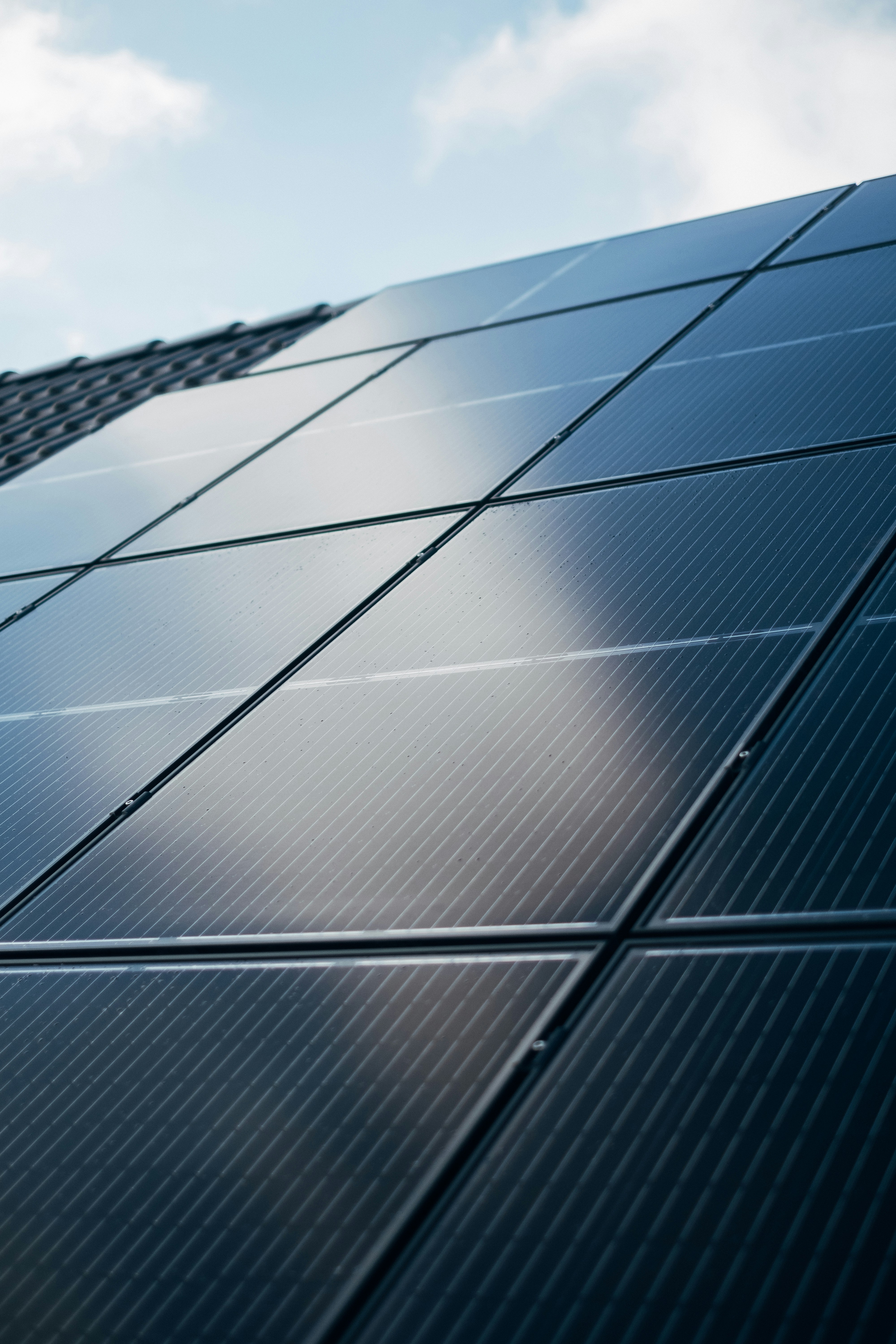
IEA · World Energy Investment 2024
"First time in history"
Clean energy investment exceeded fossil fuels globally
The Defense
Six Pillars of the Defense
Pillar 01
Profitability at Scale
Renewables have achieved genuine cost competitiveness in electricity generation — solar LCOE fell 83% since 2009. But full deployment requires storage, grid integration, and green hydrogen infrastructure that aren't yet self-sustaining without private capital underwriting cost reductions.
Pillar 02
Funding the Transition
Global clean energy investment surpassed $2 trillion in 2024 — exceeding fossil fuel investment combined for the first time in history. Private capital from energy companies is the primary mechanism driving this transformation.
Pillar 03
Rational Capital Allocation
Punishing the energy sector for rational capital allocation destroys the very investment flows that accelerate the transition. The sector is not the problem — it is the primary vehicle through which a fully renewable global energy system becomes economically viable.
Pillar 04
Tech as Clean Energy Driver
Microsoft, Amazon, Google, and Meta accounted for 49% of all global corporate clean energy PPAs in 2025. Their long-term contracts bring new renewable capacity into existence that would not otherwise be built — and are singlehandedly reviving nuclear power as a commercially viable proposition.
Pillar 05
AI Accelerates Decarbonization
The compute driving AI emissions is also the compute optimizing grids, improving renewable forecasting accuracy by up to 20%, and accelerating materials science for next-generation batteries. The tool is inseparable from the solution.
Pillar 06
Efficiency Is Improving Rapidly
GPU performance per watt improved ~4,000× over the last decade. Google reduced energy per AI prompt by 33× in 12 months. The economic and scientific value produced per unit of energy consumed is growing dramatically — and the trajectory is accelerating.
The Investment Gap
Annual clean energy investment in emerging economies must triple to $2.2–$2.8 trillion per year by the early 2030s.
The totality of OECD government budgets could not sustain this level of spending. Private capital is not a supplementary source — it is the primary mechanism through which the transition can occur at the required pace and scale.
The Evidence
Key Numbers
$2T+
Global clean energy investment in 2024
IEA
83%
Solar LCOE decline since 2009
IRENA
49%
Of all global corporate clean energy PPAs signed by 4 tech companies in 2025
BloombergNEF
43%
Of all clean energy PPAs in 2024 signed by datacenter operators
BNEF
$1.5T
Annual fossil fuel subsidies worldwide
IEA
$2.8T/yr
Annual investment needed in emerging economies by early 2030s
IEA
Local Evidence · Tennessee
The Defense Comes Home
Tennessee is not a bystander in the clean energy transition — it is its most concentrated current expression. The state that built the first nuclear infrastructure is now building the next generation of it, in direct partnership with the data center industry.
Memphis, TN · AI Infrastructure
xAI Colossus
The world's largest AI supercomputer — 200,000+ GPUs training the Grok language model — sits in Memphis, Tennessee, powered by TVA's grid. But the energy story here is one of rapid decarbonization, not entrenchment.
$430M
Tesla Megapacks purchased
168
Megapacks deployed for Colossus II
150 MW
TVA grid connection (MLGW)
100 MW
Solar + storage project planned
Defense relevance: Colossus launched with gas turbine backup power and faced justified criticism. xAI's response was to invest $430M in Tesla Megapacks, connect to TVA's grid (≈60% clean), apply for an 88-acre solar array, and commit to removing the turbines entirely once the second substation is complete. The arc is from gas-dependent to battery-backed, solar-supplemented, and grid-integrated.
Oak Ridge, TN · Nuclear Revival
TVA & America's First Commercial SMR
The Tennessee Valley Authority — the same federally chartered utility powering Colossus — is building America's first commercial small modular reactor at the Clinch River site in Oak Ridge, the birthplace of American nuclear power.
$400M
DOE grant awarded Dec 2025
BWRX-300
GE Vernova Hitachi SMR design
6 GW
TVA total SMR pipeline (ENTRA1)
Early 2030s
Target commercial operation
Defense relevance: Oak Ridge was established in 1943 as the Manhattan Project's uranium enrichment site. Eight decades later, the same Tennessee soil hosts the NRC permit application for the nation's first commercial SMR — with data center demand providing the market signal that makes the economics viable. Tennessee is not a coincidence; it is the through-line.
The Through-Line
The state that invented the atom bomb's fuel is now building the clean energy infrastructure to power AI at planetary scale. From the Manhattan Project's calutrons to TVA's BWRX-300 permit to xAI's Megapack-backed supercomputer — Tennessee is the defense's strongest local exhibit.
80+ yrs
Tennessee nuclear heritage
Exhibit A
Twelve Companies, One Direction
From ocean waves to nuclear reactors to hyperscale data centers — energy companies and tech giants are jointly funding the full spectrum of technologies required for a viable global clean energy transition.
Panthalassa
Portland, OR startup converting open-ocean wave motion into green hydrogen. $78.1M raised, backed by Lowercarbon Capital.
$78.1M raised
Tesla Energy
31.4 GWh of energy storage deployed in 2024. 114% YoY growth, $10.1B revenue. Megapack solving intermittency at grid scale.
114% YoY growth
Bloom Energy
Solid oxide fuel cells with 60% hydrogen efficiency demonstrated in 2024. 1.3 GW deployed globally. Bridge to the hydrogen economy.
60% H₂ efficiency
TerraPower
Natrium sodium-cooled SMR. $1.4B raised, NVIDIA-backed via NVentures. NRC safety approval April 2025. Online by 2030.
$1.4B raised
NuScale Power
First NRC-certified SMR design in the US. $1.8B+ invested. 6 GW TVA partnership signed in 2025.
6 GW partnership
TotalEnergies
26 GW renewable capacity, ~$5B low-carbon investment in 2024. Seville Solar Cluster — Europe's largest solar installation.
26 GW capacity
Shell
$10–15B low-carbon commitment 2023–2025. Holland Hydrogen 1 in Rotterdam. Net-zero emissions pathway to 2050.
$10–15B committed
BP
60.6 GW renewables pipeline as of end-2024. Lightsource BP solar platform. $1.5–2B/year in transition investment.
60.6 GW pipeline
Microsoft
19.9 GW clean energy portfolio (264% YoY growth). 20-year PPA to restart Three Mile Island — 835 MW. 10.5 GW Brookfield deal for new capacity.
835 MW nuclear PPA
Amazon
~35 GW clean energy contracted across 24 markets. 960 MW Susquehanna nuclear PPA. Largest corporate clean energy buyer globally.
~35 GW contracted
Kairos Power SMR partnership for up to 500 MW of advanced nuclear. Long-term track record of carbon-neutral operations and renewable matching.
500 MW SMR deal
Meta
10.24 GW contracted in 2025 alone across 28 new solar deals. 23% of new contracts were nuclear PPAs. Second largest U.S. corporate buyer.
10.24 GW in 2025
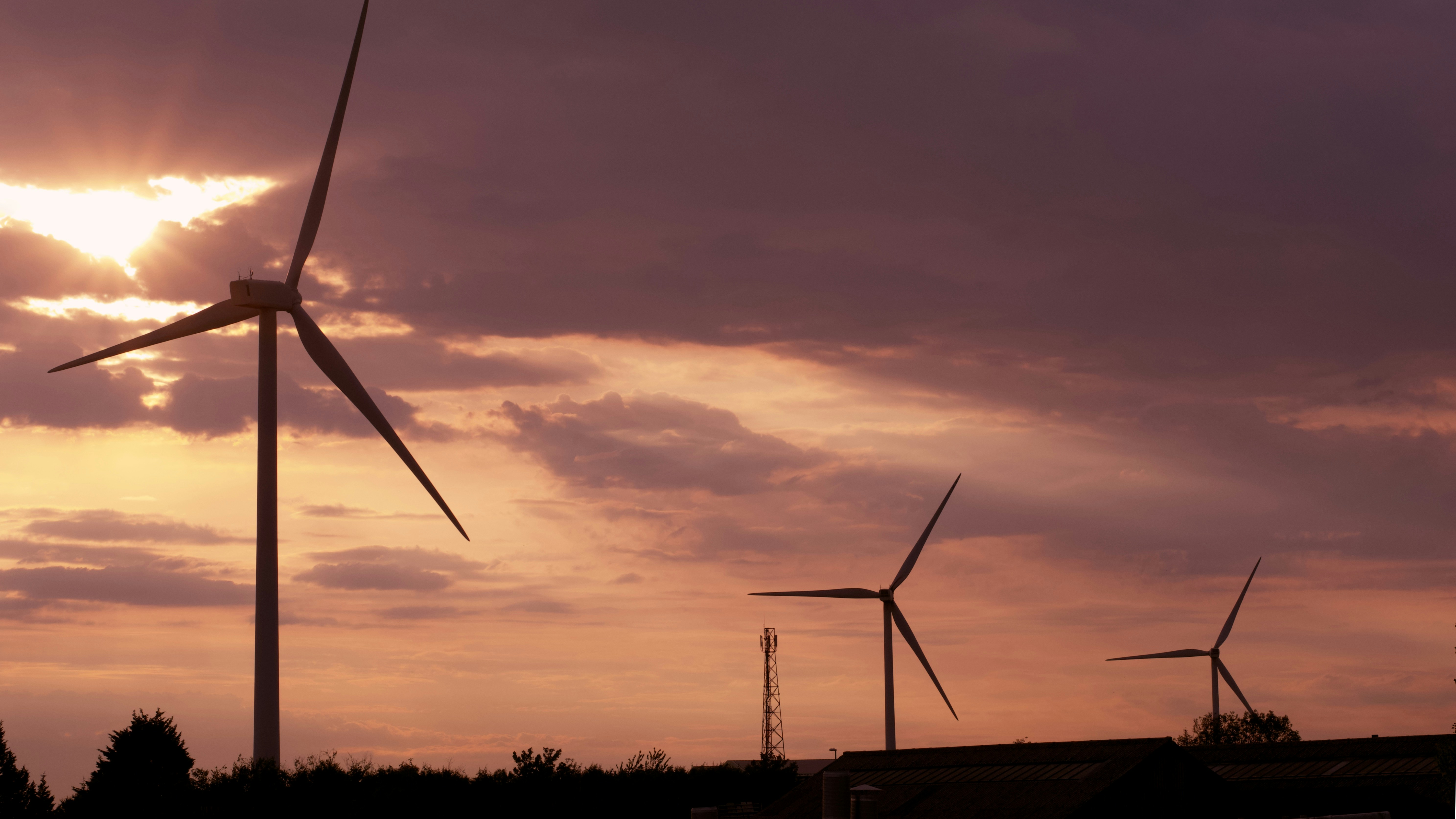
The transition requires the private capital, project expertise, and infrastructure reach that the energy and technology sectors uniquely provide. They are not the obstacle. They are the mechanism.
Defense Brief · In Defense of the Energy Sector · March 2026
Research Brief
Read the Full Research Brief
A seven-section analysis covering renewable economics, company profiles, the investment gap, the profitability bridge argument, and the role of AI and datacenters as drivers of the clean energy transition — fully cited with sources from IEA, IRENA, BloombergNEF, Lazard, and BNEF.